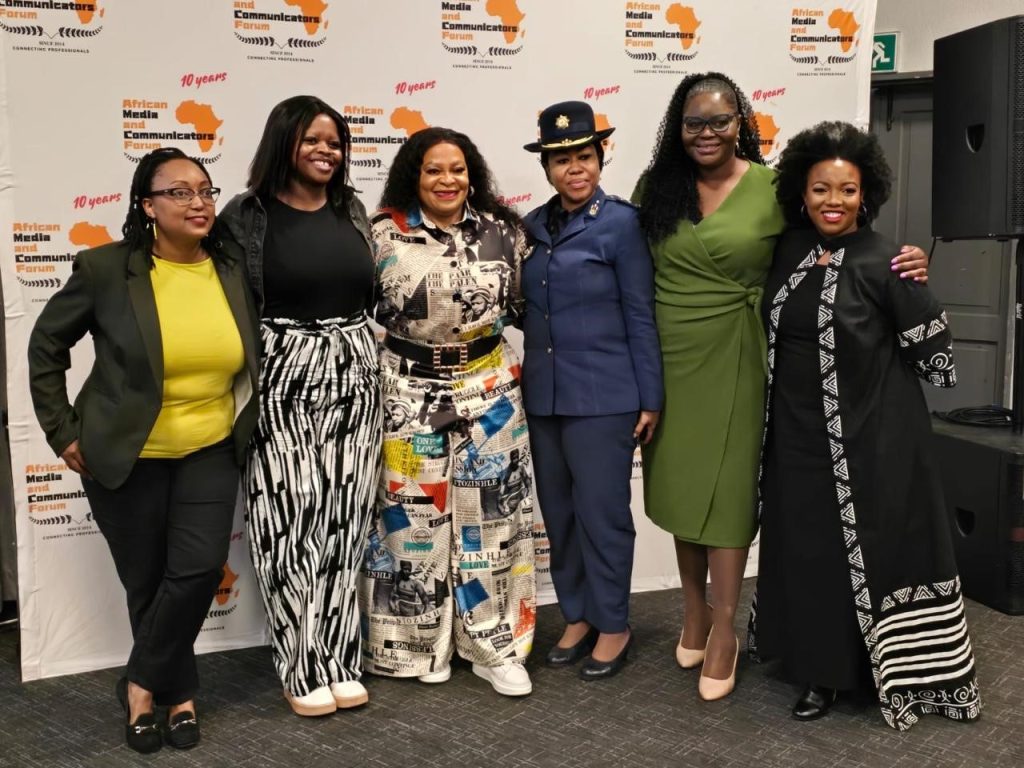
African National Congress (ANC) First Deputy Secretary-General and former Minister of Communications Nomvula Mokonyane has called on African journalists, media executives and communication professionals to confront misinformation, declining public trust and technological disruption while ensuring that communication remains anchored in humanity, democracy and Africa’s development.
Mokonyane, who served as South Africa’s Minister of Communications in 2018 and previously held the Water and
Sanitation and Environmental Affairs portfolios, addressed the African Media & Communication Forum at the Birchwood
Hotel in Boksburg.
Speaking under the theme “Navigating the New Media World: Turning Change into Opportunity”, Mokonyane said digital
transformation, artificial intelligence and the rapid growth of new information platforms were fundamentally reshaping the
relationship between media, institutions and society.
“ “We are living through a moment of profound disruption. Digital transformation, artificial intelligence, the explosion of information platforms, the erosion of public trust and the rise of misinformation and disinformation are changing how we inform, influence and organise our societies.”
— NOMVULA MOKONYANE
Behind every story is a human being
Mokonyane urged journalists and communication professionals not to lose sight of the human consequences of the
information they publish and distribute. She said the speed and reach of digital communication meant that information
could travel across communities, countries and continents within seconds, often before its accuracy or impact had been
properly considered.
“Behind every story is a human being. Behind that person is a family and a community. We must never become so
consumed by technology and the race to communicate that we forget the human consequences of what we put into the
public domain.”
She cautioned that headlines, images and social media posts could continue affecting people long after the news cycle
had moved on.
Media freedom must be matched by responsibility
Mokonyane reaffirmed the importance of an independent, diverse and ethical media as a cornerstone of constitutional
democracy.
“Responsible journalism remains indispensable. We must defend media freedom and independence, while recognising
that freedom must also be accompanied by responsibility, accountability and commitment to the societies we serve.”
She said misinformation and disinformation were increasingly threatening social cohesion, public confidence and trust in
democratic institutions, placing an even greater responsibility on professional journalism to separate verified information
from opinion, speculation and deliberately manufactured narratives.
Africa must tell the full African story
Mokonyane challenged African media and communication practitioners to take greater responsibility for how the
continent is represented in the global information environment. She said Africa should not hide its difficulties, but neither
should the continent allow itself to be defined only through poverty, conflict, migration, instability and failure.
“We need another side of the African story, one that speaks about our resilience, our progress and our possibilities, so
that generations to come do not give up on building a better Africa and a better world.”
She stressed that this did not mean shielding governments or political leaders from scrutiny. African journalism, she said,
must continue exposing wrongdoing, questioning those in authority and demanding accountability, while also giving
proper context to Africa’s development journey.
CONNECTING PROFESSIONALS • SINCE 2014
Communication must strengthen social cohesion
Mokonyane also addressed tensions around migration and warned against communication that reduced complex
continental challenges to simplistic or inflammatory narratives.
She argued that migration had to be understood within a broader context of inequality, conflict, uneven development and
Africa’s unfinished development agenda. Communication, she said, should help societies understand these realities
rather than deepen divisions between communities.
She also emphasised that political leaders and public institutions had a responsibility to communicate with greater
relevance and purpose. “Communication cannot substitute performance,” she said, adding that government
communication should demonstrate what institutions are doing, why it matters and how programmes improve people’s
lives.
Technology must become an African opportunity
While acknowledging the risks associated with new technology, Mokonyane said the digital revolution had also created
important opportunities for greater participation and accountability. Digital platforms had enabled people in townships,
rural communities and other previously marginalised areas to raise concerns, expose service-delivery failures and
engage directly with institutions.
“The new world is not something that simply happens to us. It can become an instrument for change, transformation and
growth. It can become an opportunity to identify talent, broaden participation and amplify voices that previously did not
have access to traditional platforms.”
She called for greater investment in African content production, community media, digital literacy and the development of
women and young people across the media and communication value chain.
Women must participate beyond visibility
Speaking during Women’s Month, Mokonyane said genuine transformation required more than simply increasing the
visibility of women in media.
“We cannot only insist on inclusivity. We must insist on ownership, participation and involvement in the final production
of the story.”
She called for mentorship, institutional support and deliberate interventions to strengthen women’s participation in
ownership, leadership and decision-making across the communication sector.
Forum has an important role to play
Mokonyane welcomed the African Media & Communication Forum as an important platform for journalists, editors,
media executives, public relations practitioners and communication professionals to engage with the rapidly changing
information environment.
She called for continued dialogue on artificial intelligence, digital transformation, media sustainability, ethics,
misinformation, ownership, community media and the participation of women and young people.
“Let us navigate this new world together with courage, clarity and commitment to a better Africa and a better world,”
Mokonyane concluded.
The African Media & Communication Forum also expressed its appreciation to its members, journalists, media practitioners and
communication professionals across the public and private sectors for their continued support. The Forum further
acknowledged the contribution of its partners and sponsors, whose support enables the organisation to deliver its programmes
and advance its ongoing work to develop, connect and strengthen the media and communication fraternity across Africa.