
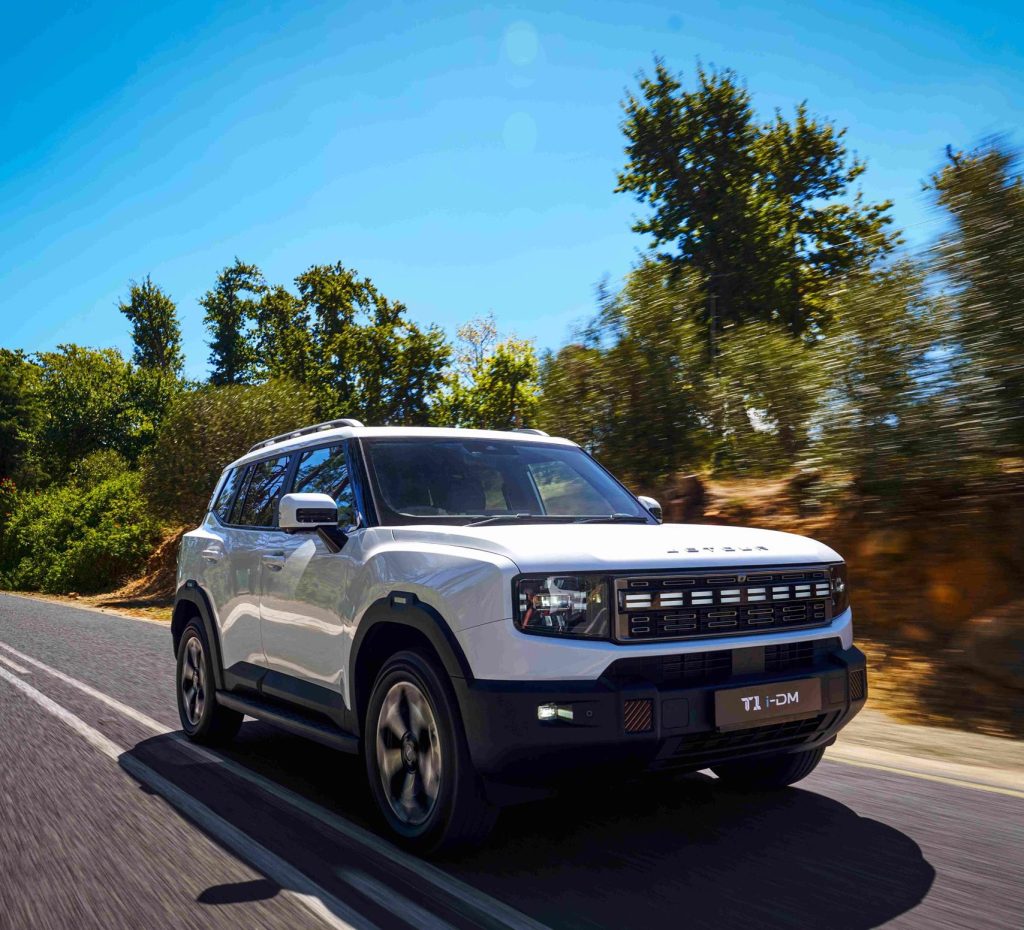
The Jetour T1 i-DM arrives at an interesting time for South African motorists. As fuel prices, running costs and environmental concerns increasingly influence buying decisions, plug-in hybrids offer a compromise between the convenience of petrol power and the efficiency of electric motoring. At R689,900, the T1 i-DM is pitched as an attainable premium SUV rather than an exotic electrified flagship.
On paper, it is an impressive package. The T1 i-DM combines a 1.5-litre turbocharged petrol engine with an 18.4kWh battery and electric motor, producing a substantial 250kW and 530Nm combined. Jetour claims an electric-only range of up to 100km on the NEDC cycle, while the combined range can reach 1,200km.
Those figures immediately make the T1 attractive for South African driving. A 100km claimed electric range is enough to cover many daily commutes without firing up the petrol engine, provided the vehicle is charged regularly. For longer journeys, the petrol engine removes the range anxiety associated with a pure EV.
Charging is reasonably practical, too. Jetour says the battery can charge from 30% to 80% in 27 minutes using a 50kW DC charger, while a 6.6kW AC connection takes about three hours from 30% to full.
But the T1 is more than an economy exercise. Its 530Nm gives it the sort of effortless shove expected from a performance-oriented SUV, while the electric motor’s instant torque should make overtaking and urban driving particularly smooth.
Inside, the T1 follows the current Chinese-SUV formula: plenty of technology, a large infotainment display and an impressive equipment list. Highlights include a 15.6-inch infotainment screen, 10.25-inch digital instrument cluster, Apple CarPlay and Android Auto, panoramic glass sunroof and a 540-degree camera system.
Its practicality is also well suited to family life. The T1 offers 574 litres of luggage space, expanding to 1,455 litres with the rear seats folded. It has 190mm of ground clearance, while Jetour claims a 600mm wading depth and equips the i-DM with intelligent four-wheel drive, crawl control and hill-descent control.
The big question is whether South African buyers will embrace the Jetour badge as readily as the specification. The brand has expanded rapidly, with more than 55 dealerships locally, while Jetour says it has also invested heavily in parts availability. That growing footprint is important for buyers considering a relatively new brand.
The T1 i-DM’s biggest strength is therefore its versatility. It can behave like an EV during the daily commute, a petrol SUV on long-distance trips and a capable all-weather vehicle when conditions deteriorate.
There are caveats. The claimed 1.1L/100km consumption figure is heavily dependent on maintaining a charge and the test conditions; real-world consumption will inevitably be higher once the battery is depleted. Jetour itself warns that actual consumption varies according to driving conditions, altitude, weather, wheel size and driving style.
Overall, the T1 i-DM makes a compelling case for hybrid motoring in South Africa. It combines impressive performance, generous technology and genuine long-distance flexibility at a price that undercuts many similarly specified SUVs. For buyers prepared to plug in regularly, it could be one of the more convincing arguments yet for choosing a plug-in hybrid over either a conventional petrol SUV or a full EV.