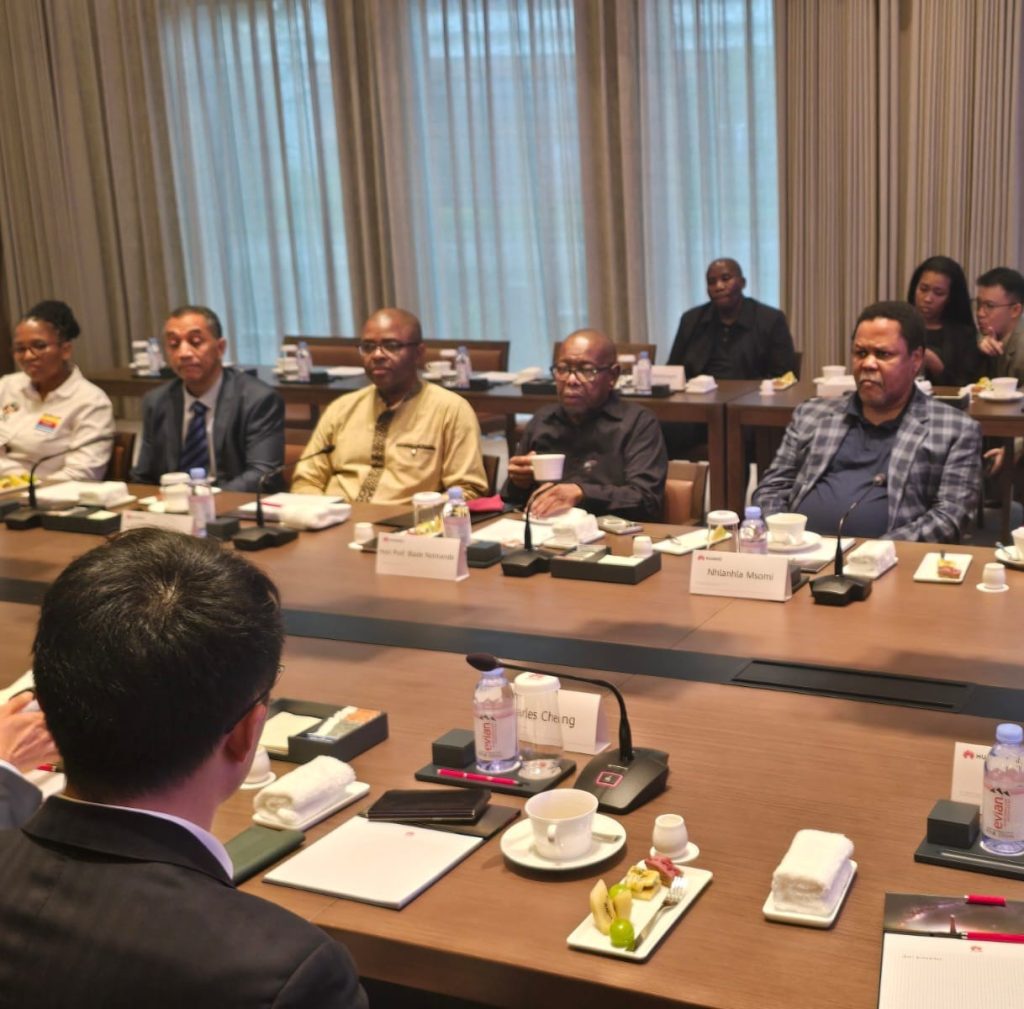
South Africa’s Minister of Higher Education, Science and Innovation, Blade Nzimande, has intensified engagement with global technology firm Huawei, signaling renewed focus on digital skills development, research collaboration and innovation support.
The engagement comes at a time when South Africa is seeking stronger partnerships to equip young people with the technological skills needed in an increasingly digital economy. Huawei, which has maintained a presence in the country for years, has often worked with universities, technical institutions and government-linked initiatives aimed at expanding access to information and communications technology.
Minister Nzimande’s discussions with Huawei are expected to center on opportunities for training, infrastructure support and the strengthening of links between education and industry. Analysts say such cooperation could help address critical shortages in digital and technical skills, particularly in fields such as artificial intelligence, cloud computing, telecommunications and network engineering.
For South Africa, the potential benefits of closer cooperation are considerable. The country continues to grapple with high youth unemployment, and many graduates face difficulty entering the labour market without practical digital experience. Partnerships between government and major technology companies are increasingly viewed as one way to bridge that gap by offering certification programmes, internships and exposure to current industry standards.
Huawei has previously rolled out training academies and ICT competitions in several countries, including across Africa, as part of broader efforts to build local talent pipelines. Supporters of the minister’s engagement argue that drawing on such resources could help local institutions modernise curricula and improve student readiness for a fast-changing workplace.
At the same time, the relationship is likely to attract public scrutiny. Technology partnerships involving multinational firms often raise questions around data governance, procurement transparency and the long-term strategic interests of the country. Observers say any agreements arising from the engagement will need to be handled with openness and clear public accountability to ensure that educational and national priorities remain at the forefront.
Within the higher education and science sectors, there is growing recognition that collaboration with industry is no longer optional. Universities and colleges are under pressure to produce graduates who are not only academically qualified but also adaptable, innovative and digitally capable. If managed effectively, cooperation with firms such as Huawei could provide valuable resources, technical expertise and platforms for applied learning.
Minister Nzimande has repeatedly emphasized the importance of science, technology and innovation in driving inclusive development. His engagement with Huawei appears consistent with that broader agenda, particularly as government seeks to expand participation in the digital economy and strengthen the country’s innovation ecosystem.
Whether the talks lead to formal agreements or pilot projects remains to be seen. However, the engagement itself underscores a clear policy direction: South Africa is looking to forge practical partnerships that can accelerate digital transformation and widen opportunity for students and young professionals.
If the collaboration delivers tangible outcomes in training, research and job creation, it could mark an important step in aligning higher education with the demands of the modern economy — while also testing how effectively public-private partnerships can serve the national interest.