
By Ndumiso Mlilo
South African small businesses should take advantage of China's zero-tariff policy to export their products to the world's second-largest economy, and the single biggest global market in the world said a panel of academics on Saturday.
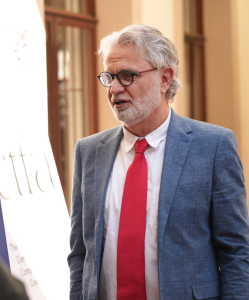
Dr Gideon Chitanga from BaoBab Ubuntu Media addressed members of the township economy, various stokvel members, and small businesses on Saturday in Braamfischer. He explained that the zero-tariff policy has opened game changing opportunities in international trade at a time when other major economies are closing their markets.
China opened its market allowing zero tariffs’ imports from 53 African countries except Eswathini starting on the 1 st of May 2026. The policy initially targeted Least Developed Economies (LDCs).
China has a population of about 1,4 billion people providing the single biggest domestic market of any nation that small businesses should take advantage of. Its major cities outside Beijing and Shanghai, and other regions beyond the metro pol regions provides under explored markets for diverse products under the zero-tariff policy. The zero-tariff preference scheme eliminates import duties on thousands of qualifying agricultural and industrial goods
including agro-processed foods, fresh produce (avocados, nuts), plant extracts, flowers, and automotive components.
" Small business are facing massive opportunities to expand their business by leveraging key values chains in the international China-South Africa, and China-Africa trade ecosystem. As small businesses and township economy actors can also sell a whole lot of all the things that you produce which qualify under the policy. If we sell those things, it means we have the potential to expand our agriculture, manufacturing, production of timber and other industries to create more jobs, grow our economy, and drive sustainable economic development with
the support of our close international friends. These opportunities for are not only for big companies, but also SMEs in Gauteng and the rest of South Africa. You have to be organized to participate at the highest level," said Chitanga.
A panel of discussants told the business community to approach the Department of Trade, Industry and Competition, the Department of International Cooperation, the South African Revenue Authority, Local authorities, and provided relevant websites for further information about their eligibility, rules and processes related to the zero-tariff policy. The panellists informed the participants that they were required to respect important rules related to the policy in South Africa and China with regards certification and access to the Chinese market. Chitanga said South Africa has cordial relations with China, “The South African government has good relations with China…. Other than the zero tariffs and economic cooperation, there are lots of scholarships and cultural exchanges that are available between China and South Africa. There are scholarships for our kids who are in universities, so please keep your ears
open so that when those opportunities come out, you can also send your children to study at advanced and well-equipped Chinese universities on full scholarships.
He urged musical groups, those in theatre and film, to get involved in exchanges with China. Chitanga said the Africa-China relations have created opportunities to visit China to experience Chinese culture and technological advancement and innovations. He said when the South African youths visit China, they will see what their counterparts are doing in further modernizing their country.
Chitanga said the zero tariff is a great opportunity for African countries to expand and increase their exports to the Chinese markets, and that would help to create more jobs, build economies, improve their conditions by creating more businesses to catalyze economic modernization.