

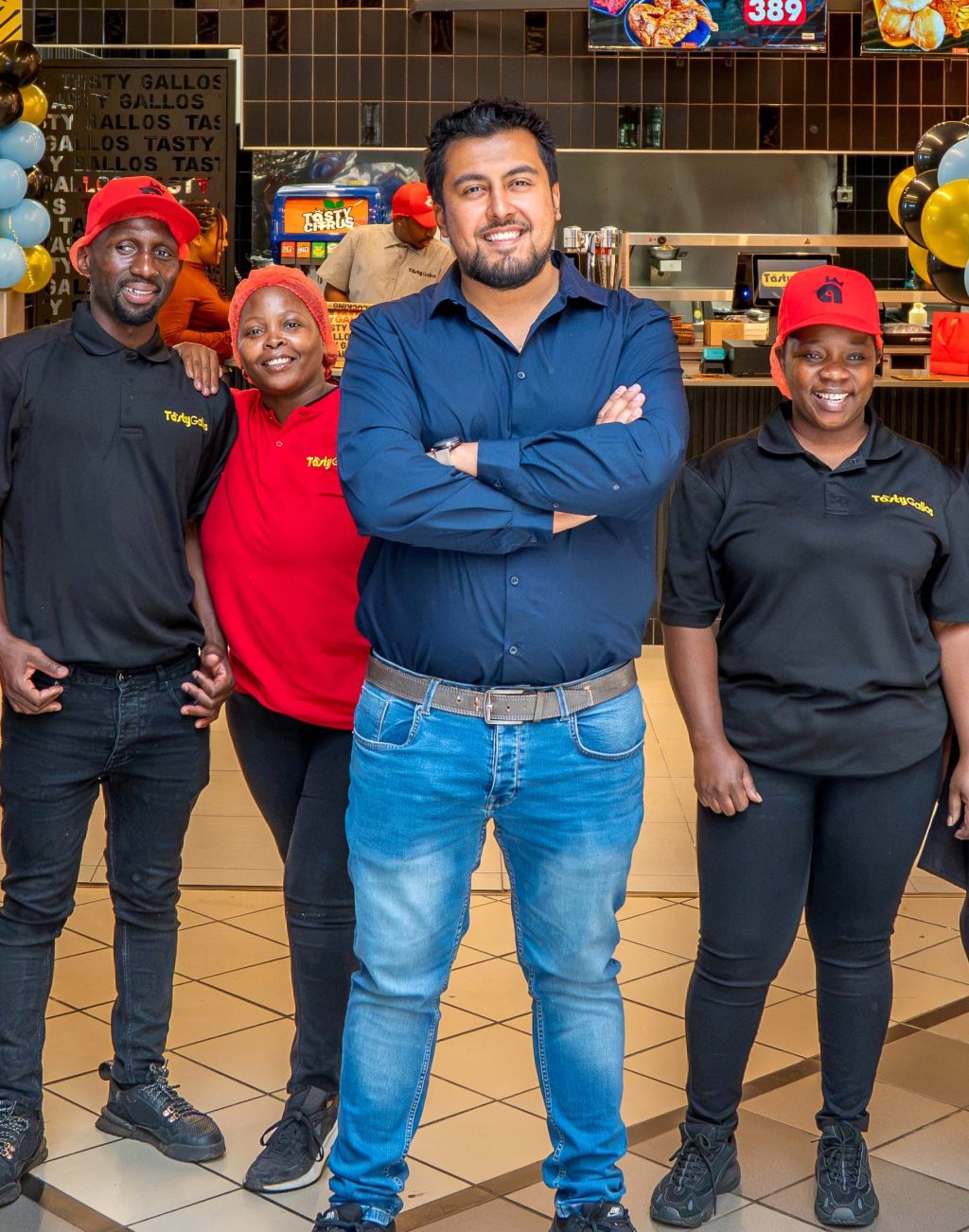
Tasty Gallos has entered the university campus market for the first time, opening a restaurant at the University of the Witwatersrand’s (Wits) Student Union Building Matrix to tap into growing demand among Gen Z consumers, who spend a significantly greater share of their budgets on restaurants, takeaways, and fast food than older age groups.
The new restaurant, which held a soft launch last week before officially opening on Tuesday, takes chicken franchise directly onto campus, putting it within easy reach of students between lectures and close to accommodation. The restaurant is also certified by the South African National Halaal Authority (SANHA), appealing to a diverse range of student needs and tastes.
Muhammed Gutta, founder and CEO of Tasty Gallos, says Gen Z is unmistakably the fast-food generation and an increasingly critical market for fast-food brands, with convenience playing strongly into how students eat. Standard Bank’s 2026 Youth Barometer Report supports this, finding that 18- to 24-year-olds spend around 12% of their monthly budget on restaurants, takeaways, and fast food, compared with 7% among 25- to 29-year-olds.
“At this age, takeaways fit comfortably around the rush of studying, part-time work, and life on the go, and the appetite for fast food goes well beyond filling a space in the grocery cupboard. Eating out is firmly part of everyday student life now, and grabbing a meal with friends has become a key social occasion in its own right,” he says.
Campus quick service restaurants (QSRs) like Tasty Gallos are positioned at the heart of that demand, close to classes and student accommodation, where convenience carries serious weight in deciding where to eat. For students, that means access to quick, filling meals without travelling off campus or spending part of their food budget on transport, as well as ready-to-eat options for those without convenient cooking facilities.
For operators, campuses concentrate large numbers of potential customers in one area, with predictable peaks in foot traffic around lecture breaks and strong repeat-purchase potential throughout the academic year. They also offer brands an opportunity to build familiarity with young consumers.
Gutta adds that the Wits opening also illustrates a broader principle behind the franchise’s expansion strategy – namely that different locations create different customer needs and commercial opportunities, and stores must be selected accordingly.
One franchise, four distinct markets
Street-front QSRs near business and residential centres, for example, can draw customers throughout the day, including workers buying lunch and families collecting dinner. Operators can easily build loyal local followings and relationships with nearby workplaces.
“Our flame-grilled and fried chicken, with the bold flavour of our own sauces and spices, gives customers a reason to choose Tasty Gallos before, during, or after work. But the operator needs to understand the area well enough to make that choice easy for customers who are short on time, which is why we are highly particular about who we welcome as franchisees,” he notes.
By comparison, forecourt fuel station restaurants benefit from an existing stream of customers already stopping for fuel, giving commuters and long-distance travellers an opportunity to collect a meal without making an additional stop. Tasty Gallos is fast growing its presence in this market, with a QSR planned at another major fuel station in Pretoria later this year.
Shopping centres offer another established market, with Tasty Gallos restaurants at Eastgate, Greenstone, The Glen, Mthatha Plaza, and other locations benefitting from high foot traffic and visibility. Shoppers and centre employees provide a valuable customer base throughout the week, while families and larger groups create opportunities for bigger orders.
With the Wits opening extending its reach into the student market, Tasty Gallos is actively expanding across campus, street-front, fuel station, and shopping centre sites.
The brand guides franchisees on which locations best suit their goals and how to make the most of them. Gutta says this benefits students, workers, and families as much as restaurant operators, with food offerings and a service approach that continue to evolve to better meet their needs