

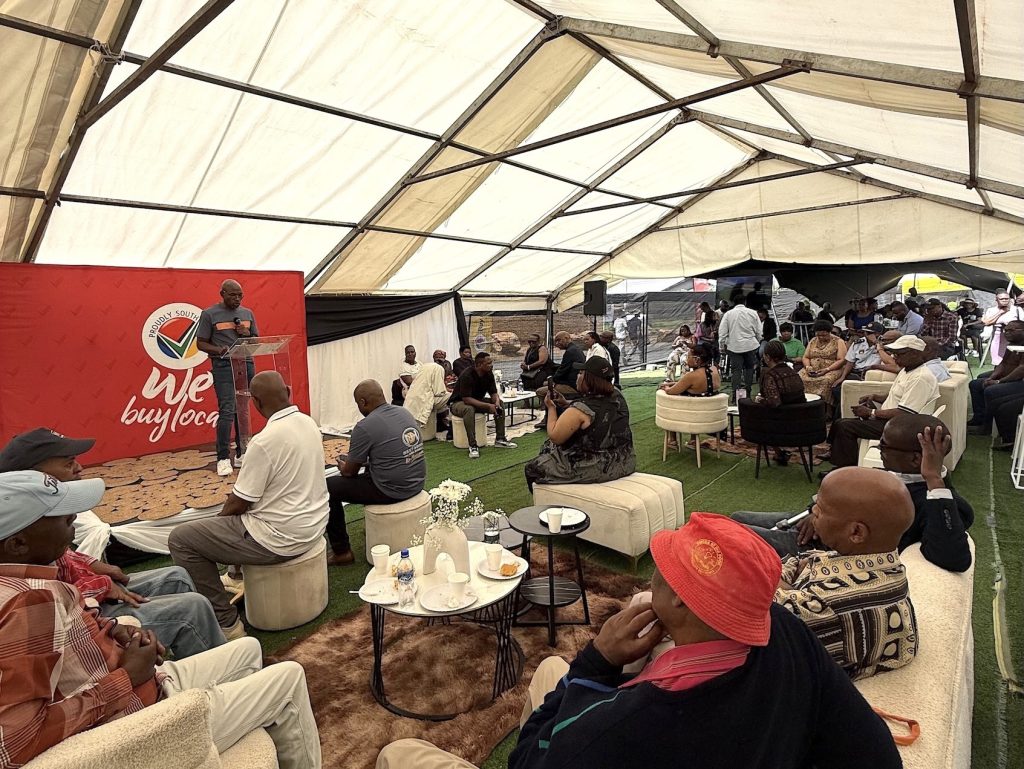
Proudly South African has been given an incredible opportunity to actively and
practically drive localisation in the R190 billion spaza economy, through a
groundbreaking partnership with Next Door Spaza Shop Management Company.
The initiative will leverage aggregated procurement and real-time analytics to
increase buying power, improve supply efficiency, and expand shelf space for locally
made products across 1 000 Next Door-branded spaza shops set to be rolled out in
Gauteng during the first year.
The partnership is expected to create sustainable market-access opportunities for
South African manufacturers, particularly producers of Proudly South African
products. Through the Next Door township and rural retail network, local
manufacturers will gain access to strategically located community-based stores,
providing valuable shelf space and visibility in previously underserved markets.
The Next Door model is designed to create opportunities across the retail value
chain while strengthening the position of locally owned shops. Where feasible, stores
will source products such as bread, mielie meal and other essential goods from local
manufacturers, while producers and farmers will be integrated into the Next Door
supplier network, enabling shop owners to source products more efficiently.
The initiative also introduces standardised operating systems across affiliated
retailers, helping to address procurement and distribution inefficiencies that have
contributed to the decline of many locally owned spaza shops.
A key differentiator of the model is its use of technology and data analytics. Through
a centralised digital platform, Next Door will monitor store performance in real time,
tracking sales, orders and inventory levels. The system will proactively identify
anomalies and enable intervention where support is required, helping store owners
manage their stores better to improve performance and profitability.
Eustace Mashimbye, Chief Executive Officer of Proudly South African, says the
spaza market can be a powerful catalyst for localisation and the growth of local
producers.
“Spaza shops and similar township retail stores are more than neighbourhood
convenience stores. They represent a significant opportunity to stimulate local
production, create jobs and grow South African businesses. By aggregating demand
across thousands of community-based retailers, we can create sustainable market
opportunities for local producers, support the growth of small businesses and drive
inclusive economic development. This partnership with Next Door gives expression
to our quest to tap into the township economy, create market access opportunities
for local manufacturers, expand local production capacity and make localisation a
reality on a much larger scale,” says Mashimbye.
Labane Maluleke, Managing Director of Next Door, says the rollout of the network
across Gauteng's townships and rural communities will increase the visibility and
availability of quality South African-made products while creating new opportunities
for local producers.
“Our vision is to build a retail ecosystem that connects local producers directly with
township and rural consumers. By expanding access to quality South African-made
products, we are strengthening local manufacturing, creating commercial
opportunities for producers and helping to build more resilient and sustainable local
economies.”
Maluleke says Next Door is engaging several public-sector partners, including the
Department of Trade, Industry and Competition and the Department of Small
Business Development (DSBD), to explore how Next Door could partner with the
Spaza Shop Support Fund for better outcomes in the programme.
The fund provides qualifying spaza shop owners with financing support for stock,
equipment upgrades and business development interventions.
“We are creating opportunities for more South Africans to own and operate
successful local shops while generating employment opportunities in townships and
rural communities. Next Door is about revitalising local retail, reopening
opportunities, growing township economies and ensuring communities become
active participants in the retail value chain rather than simply as consumers only,”
says Maluleke.
The company aims to establish 1 000 Next Door stores in its first year of operation,
with plans to expand the model across all nine provinces in the years ahead.