
Therèse Havenga, Head of Business Transformation at Momentum Savings
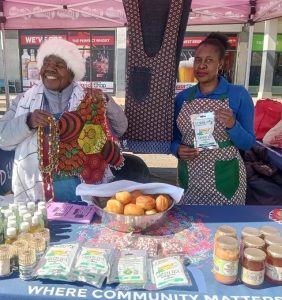
Every week, somewhere in South Africa, a woman finishes selling tomatoes beside the road, counts the
day’s takings and puts a few rand aside for a Lotto ticket. She knows the odds are against her. Still, until the
draw, she can imagine school fees paid, debt cleared and money no longer being the first worry of the
morning. She’s not simply buying a chance to win. For a little while, she’s buying the possibility of life being
easier.
That’s the part of gambling we speak about least. Gambling doesn’t only sell the possibility of money. It sells
the temporary relief from feeling financially trapped. It sells the hope that life can change. But when that
hope is repeatedly bought through a betting app or Lotto ticket, gambling can quietly start posing as a
financial plan.
The scale is growing. In 2025, Statistics South Africa reported that income from online gambling services
had risen sharply between 2018 and 2023. The casino now sits in our pockets.
For many, gambling becomes a rescue fantasy: one lucky moment solving a problem that feels too big to
solve otherwise. Gambling sells speed to people whose financial problems require time.
When debt consumes your income, saving R100 or R200 can feel pointless next to what you owe. A jackpot
promises to close the distance between the life you have and the life you need. The maths will most likely
be improbable, but emotionally it makes sense.
Placing a bet changes the conversation in your head from, “I don’t know how I’m going to get through this,” to
“Maybe this is the moment everything changes.”Helplessness gives way to anticipation.
Occasional wins deepen the pull. Our minds don’t keep a neat record of every rand won and lost. We
remember the rush, the near miss and the friend who turned R20 into thousands. The win becomes a story,
while losses disappear into the next attempt.
Then comes chasing losses. The next bet no longer feels like a new risk, but a chance to undo the previous
one. Stopping means accepting that the money is gone. Continuing postpones that truth. The most
dangerous bet is often the one placed again because the last one lost.
The damage travels. Money meant for groceries, transport, rent or school fees doesn’t disappear alone. Its
absence is felt at the dinner table, in unpaid accounts and by people who never bet. A private escape now
becomes a family crisis.
That’s why “just stop” is seldom useful advice. If gambling has become a way of managing stress, shame or
despair, removing the bet without addressing what lies beneath leaves a vacuum. Help begins by naming
what gambling is expected to do: settle debt, restore hope, offer escape or win back what was lost.
Recovery starts by making the invisible visible. Add up every deposit, bet and withdrawal, not only the wins.
Delete the apps, remove stored cards and unsubscribe from promotions. If temptation remains too close,
ask gambling operators to block you through a self-exclusion programme. Tell someone you trust and seek
support if needed. Gambling-related debt cannot be gambled away. It needs an honest repayment plan, not
one final bet.
Hope is not the enemy. We all need to believe life can get better. But the danger begins when we ask chance
to do the work of a plan. The first step is not another ticket, spin or final attempt. It’s placing your hope
somewhere slower and less exciting, but far more powerful: in the next decision that’s still yours to make.
Imagine you had saved all the money you had lost.